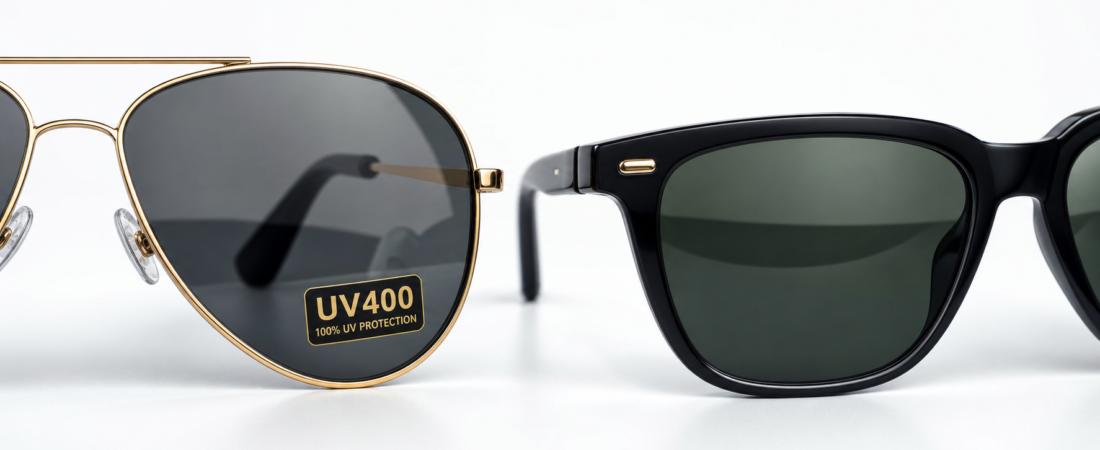
UV400 and polarized — these two terms get used a lot, sometimes interchangeably, but they refer to completely different features. Understanding the difference helps you buy smarter and protect your eyes better.
What Does UV400 Mean?
UV400 is about eye health protection. It refers to how well a lens blocks ultraviolet light. UV400-rated lenses block 100% of both UVA and UVB rays up to 400nm wavelength. Dark lenses without UV400 can actually be harmful — they cause your pupils to dilate, exposing your eyes to more radiation.
What Does Polarized Mean?
Polarization is about visual clarity and glare reduction. When sunlight reflects off flat surfaces like roads or water, it creates intense horizontal glare. A polarized filter blocks these horizontal light waves — dramatically reducing glare, improving contrast, and reducing eye fatigue.
The Key Difference
- UV400 protection = a health shield. Protects your eyes from invisible, damaging radiation.
- Polarized lenses = a vision upgrade. Cuts glare and makes everything look sharper.
They solve two different problems. UV400 protects from what you can’t see. Polarization improves what you can.
Do You Need Both?
Yes. You can have one without the other — polarized lenses don’t automatically have UV400, and vice versa. The best sunglasses combine both: UV400 protection AND polarized lenses. That gives you maximum eye safety and the clearest, most comfortable vision in any bright environment.
What to Look For When Buying
- Look for “100% UV400” on the label — not just “UV protection.”
- Confirm polarization is listed separately.
- Darker lenses don’t mean more UV protection — tint and UV rating are unrelated.
Get the best of both worlds. Every pair at Real Deal Eyewear comes with polarized lenses AND UV400 protection — built for real sun, real life. Shop the collection →